A before-and-after photo of a patient’s smile is marketing material. Under Ontario law, it is also personal health information — and using it without the right consent is a PHIPA violation.
Most Ontario dental clinics using patient photos for social media, websites, or ads are relying on generic photo release forms that do not meet the requirements of the Personal Health Information Protection Act (PHIPA). The gap between a standard commercial photo consent and one that meets PHIPA guidelines is not minor — it is the difference between defensible consent and an exposure that could result in a complaint to the Information and Privacy Commissioner of Ontario.
This guide explains what PHIPA guidelines requires when Ontario dentists use patient images for marketing purposes, what a compliant consent form must include, and what the most common consent mistakes look like in practice.
This is for Ontario dental clinic owners, office managers, and anyone responsible for patient communications and marketing compliance. It matters because dental patient photos can be classified as personal health information under PHIPA when they are connected to an identifiable individual, and the rules that govern their use are stricter than most clinics realize.
Note: This post is for general informational purposes only and does not constitute legal advice. For guidance specific to your practice’s circumstances, consult a lawyer familiar with Ontario privacy law.
Key Takeaways:
- Patient photos can be personal health information (PHI) under PHIPA guidelines when they relate to an identifiable individual in the context of their health care
- Using patient photos for marketing requires separate, explicit consent beyond clinical consent forms
- Implied consent does not apply to marketing use — express written consent is required
- PHIPA-compliant consent forms must be granular: patients must be able to consent to specific uses, not an open-ended blanket release
- Patients can withdraw consent at any time, and the clinic must have a process to honour that withdrawal
- The RCDSO and the Information and Privacy Commissioner of Ontario both have oversight over how dental clinics handle patient photos
Why Dental Patient Photos Are Personal Health Information Under PHIPA
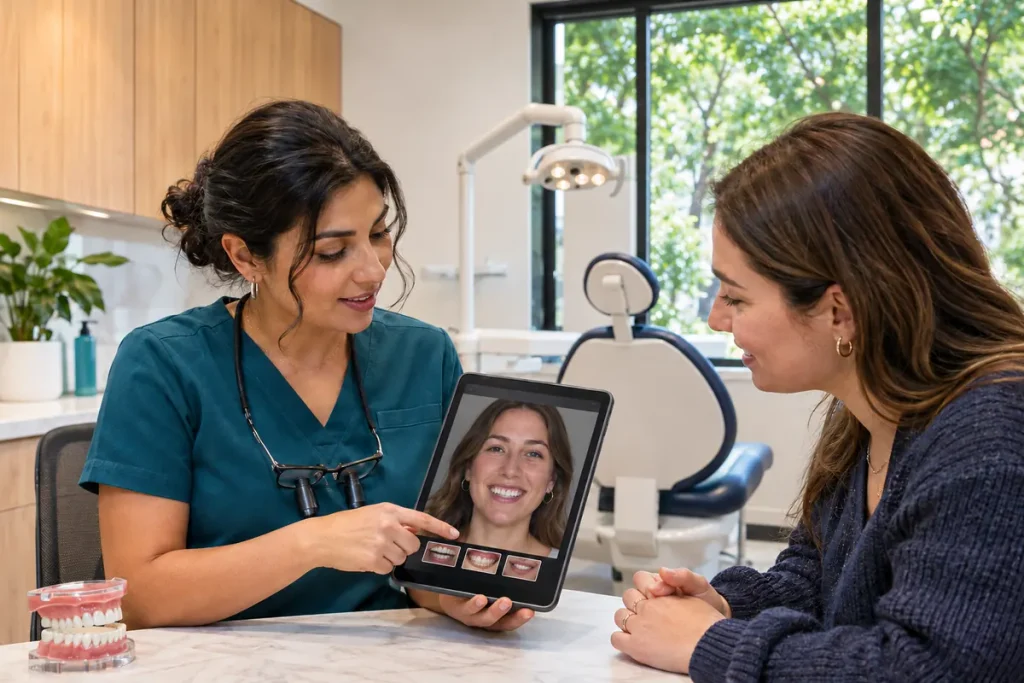
PHIPA governs the collection, use, and disclosure of personal health information in Ontario. Under the Act, personal health information includes any information about an identifiable individual that relates to their physical or mental health — including information about healthcare services provided to them. Understanding PHIPA guidelines is essential for Ontario dental clinics to protect patient privacy and handle personal health information appropriately.
A photograph taken in a dental clinic — whether it shows the patient’s face, their teeth, or a close-up of a specific treatment result — was created in the context of providing health care. Under PHIPA section 4, personal health information is information about an individual that relates to their health or health care and can be used to identify them. Where a photo can be linked back to an identifiable patient — through a file reference, metadata, context on a clinic’s social media, or any other means — it falls within that definition under PHIPA guidelines. A tightly cropped intraoral shot may not on its own identify anyone, but once it appears in a clinic’s Instagram feed alongside the patient’s name or other identifiers, the combination is PHI.
This means dental clinics are health information custodians in relation to patient photos. Under PHIPA guidelines, the obligations that apply to health records — consent before use, secure storage, patient access rights, the right to withdraw consent — apply to these images in the same way.
The Royal College of Dental Surgeons of Ontario (RCDSO) has published guidance on the use of social media that reflects this position: patient photos shared on social platforms require explicit, documented consent, and implied consent from the clinical relationship does not extend to marketing use. Following PHIPA guidelines is essential when using patient images for promotional purposes. For a broader look at how Ontario dental clinics can use social platforms compliantly, see our guide to social media marketing for dental clinics.
The Most Common PHIPA Consent Mistakes Ontario Dental Clinics Make
Using Clinical Consent to Cover Marketing Use
The most widespread mistake is assuming that a patient’s signature on a treatment consent form or a general intake form covers the use of their photos for marketing. It does not.
Clinical consent covers the procedures and care being delivered. It does not constitute informed consent for the separate purpose of using images derived from that care in public-facing marketing materials. Under PHIPA guidelines, consent must be specific to the purpose for which the information will be used. Using a clinical consent form to authorize marketing use conflates two distinct purposes and does not meet the informed consent standard.
Relying on Implied Consent
Implied consent is a valid concept under PHIPA guidelines — it applies where the purpose of the use or disclosure is obvious from the context, the patient has been given an opportunity to withhold consent, and the patient does not withhold it. For sharing clinical records between treating practitioners, implied consent is often sufficient.
For marketing use, implied consent does not apply under PHIPA guidelines. Marketing is not a purpose that is obvious from the clinical context. A patient sitting in the dental chair does not implicitly consent to having their treatment results appear on Instagram or a practice website. Obtaining consent through implication — for example, asking verbally during an appointment and treating silence or a vague agreement as consent — is not compliant with PHIPA’s requirements for the use of PHI for a secondary purpose like marketing.
Generic Blanket Release Forms
A common workaround is to give patients a general photo release that covers “all uses” without specifying them. Under PHIPA, consent must be informed — the patient must understand what they are consenting to, including the specific purposes, the channels where images will appear, and any limitations on how their information will be used.
A form that says “I consent to the use of my photos for marketing purposes” does not meet this standard under PHIPA guidelines because it does not give the patient the information they need to make a meaningful decision. Patients cannot be “appropriately informed” if the form does not describe what marketing uses are planned.
No Withdrawal Process
PHIPA gives patients the right to withdraw consent at any time. Under PHIPA guidelines, a clinic that obtains consent once and has no mechanism for patients to withdraw it — and no process for removing photos from active use once consent is withdrawn — is not compliant with the Act’s ongoing requirements.
This is particularly relevant for digital marketing under PHIPA guidelines. A before-and-after photo posted to Instagram three years ago may still be accessible even after the original post is deleted, if it was shared, embedded, or cached elsewhere. While PHIPA does not require clinics to scrub content from third-party platforms over which they have no control, they are required to remove content from their own channels when consent is withdrawn, and to document that they have done so.
What a PHIPA-Compliant Dental Photo Consent Form Must Include
A PHIPA-compliant marketing consent form for an Ontario dental clinic cannot be a generic commercial photo release. Under PHIPA guidelines, because the Information and Privacy Commissioner of Ontario and the RCDSO treat dental images as personal health information, the form must be built around patient control, transparency, and specific granularity.
Identity of the Health Information Custodian
Under PHIPA guidelines, the form must clearly identify the clinic as the health information custodian responsible for the photos, including the full legal name of the practice, the address, and the contact information for the person or role responsible for handling privacy inquiries.
Specific Description of Intended Uses
The form must describe, specifically, the purposes for which the photos will be used. A PHIPA-compliant form does not use open-ended language like “marketing purposes” — it names the channels and contexts:
- Practice website (before-and-after gallery)
- Social media platforms (name the platforms: Instagram, Facebook, etc.)
- Paid advertising (Google Ads, Meta Ads)
- Printed materials (brochures, in-office displays)
- Press or media releases
Patients should be able to consent to some uses and decline others. A form that requires all-or-nothing consent is weaker than one that allows the patient to tick the specific uses they are comfortable with.
Acknowledgment That Consent Is Voluntary
Under PHIPA guidelines, the form must state clearly that providing consent is voluntary and will not affect the quality of care the patient receives. This is a core PHIPA requirement: consent must be free from coercion. A patient who believes their care depends on agreeing to photo use has not given voluntary consent.
Right to Withdraw Consent
The form must state that the patient has the right to withdraw their consent at any time, explain how they can do so (in writing, by contacting the named privacy contact), and confirm that withdrawal will not affect their care.
Duration and Storage
The form should specify how long the photos will be retained, where they will be stored, and what security measures are in place to protect them. PHIPA requires health information custodians to implement technical safeguards to protect PHI from unauthorized access — this includes photos stored on cloud services, shared drives, or social media scheduling tools.
Patient Signature and Date
Under PHIPA guidelines, consent must be documented. The form requires the patient’s signature and the date. For patients who lack the capacity to consent independently — including younger children who cannot understand and appreciate the consent decision, and adults with cognitive impairments — the consent of a substitute decision maker is required. For children who are capable of consenting, their own signature governs.
Obtaining Consent: Process Matters as Much as the Form

A signed form is evidence of consent, but the process of obtaining consent matters too. Under PHIPA and the common law informed consent standard, valid consent requires that the patient be appropriately informed, that they have the capacity to understand what they are agreeing to, and that the agreement is voluntary.
In dental practice, this means:
- Presenting the consent form before or after the appointment, not during treatment when the patient is in the chair and may feel unable to decline
- Giving the patient time to read the form and ask questions
- Not presenting the form as a routine intake document that is bundled with clinical consent — marketing consent should be clearly distinguished from clinical consent
- Making it easy to decline — if the form is designed to feel like a required step, the voluntariness of consent is compromised
Consent for Patients Under 16 or with Substitute Decision Makers
For pediatric dental patients, the question of capacity and consent is governed by Ontario’s Health Care Consent Act and PHIPA itself. Under PHIPA guidelines, a child who is capable of making health care decisions has the right to make them — and to consent to the use of their PHI — without a parent’s involvement. Capacity under Ontario law is not tied to age: it depends on whether the individual understands the information and appreciates the consequences of deciding. A parent or guardian must consent for a child who lacks that capacity; for a child who has it, the child’s own consent controls. Clinics should not assume parental consent is required for all patients under 18.
For adult patients who lack capacity, the substitute decision maker hierarchy under Ontario’s Health Care Consent Act and Substitute Decisions Act applies.
Digital Storage, Social Media, and the Platform Problem
One of the least-discussed aspects of PHIPA guidelines for dental marketing photos is what happens after the content goes live. Most clinics focus on obtaining consent before publishing — fewer think carefully about where the photos are stored, who has access to them, and what happens if they need to be removed.
Storage and Access Controls
PHIPA requires health information custodians to implement technical safeguards that protect personal health information from unauthorized access. For patient photos used in marketing, this applies to every place those photos are stored — not just the clinical record system.
This includes:
- Cloud storage services used by the marketing team (Google Drive, Dropbox, iCloud), which must be managed according to PHIPA guidelines
- Social media scheduling tools (Hootsuite, Later, Buffer) where photos may be uploaded in advance
- Email threads where photos are sent between the clinic and a marketing agency
- The website’s media library, which may be accessible to developers or agency staff
If a marketing agency manages the clinic’s social media, those photos are being shared with a third party. PHIPA requires that the clinic have an agreement with any agent that handles PHI on their behalf — this includes marketing agencies with access to patient images. That agreement must require the agent to comply with PHIPA’s privacy obligations.
What Happens When a Patient Asks to Be Removed
When a patient withdraws consent, the clinic must remove the photos from active marketing channels under their control. This is straightforward for a website gallery or a social media profile. It is more complicated for content that has been shared, re-posted, or included in an ad that has run and been archived.
A practical compliance approach includes:
- Logging every patient photo with the consent form reference, the date of consent, and all channels where the image has been published
- Maintaining a process for actioning withdrawal requests promptly — removing from the website, deleting from scheduled posts, notifying the marketing agency
- Documenting what was removed, when, and by whom
The documentation is as important as the removal itself. If a complaint is filed with the IPC, the clinic needs to demonstrate that it had a process and followed it.
Platform Terms and PHI
Social media platforms have their own terms of service that govern content uploaded to them. When a dental clinic uploads a patient photo to Instagram or Facebook, the platform receives a licence to use that content under its own terms — terms that are separate from the patient’s consent to the clinic.
This does not create a PHIPA violation by itself, but it is relevant information the patient should have when making a consent decision. Under PHIPA guidelines, a compliant consent process should inform patients that if photos are used on social media platforms, those platforms have their own terms governing how they store and may use uploaded content. This is part of what it means for consent to be fully informed.
What Happens When a PHIPA Violation Occurs
The Information and Privacy Commissioner of Ontario (IPC) oversees compliance with PHIPA and handles complaints from patients about how their personal health information has been handled. A patient who discovers that their photos were used without compliant consent can file a complaint with the IPC.
Privacy breaches — including unauthorized use or disclosure of PHI — must be reported to the IPC in specific circumstances set out in Ontario Regulation 329/04 under PHIPA. Under PHIPA guidelines, the reporting obligation is triggered by defined conditions; it does not simply follow from any breach causing a “risk of harm” (that is the federal PIPEDA standard, which does not apply to PHIPA-regulated health information custodians in Ontario). Whether a specific breach must be reported requires a careful reading of the regulation and, in many cases, legal advice. PHIPA violations can result in investigations, compliance orders, and financial penalties.
The RCDSO also has jurisdiction over how Ontario dentists handle patient information. A complaint to the RCDSO about the use of patient photos without adequate consent can result in a conduct review under the RCDSO’s professional standards framework.
Clinics that have been using patient photos without PHIPA-compliant consent should conduct an audit of their existing consent forms and their current photo library, and take steps to obtain retroactive compliant consent or remove photos for which compliant consent was not obtained.

Frequently Asked Questions
What are PHIPA guidelines for Ontario dental clinics using patient photos?
Under PHIPA, patient photos are PHI when they can identify the patient — through their face, through context on the clinic’s social media, or through any connection back to a clinical record. Using them for marketing requires explicit, written consent that is specific to the marketing purposes, voluntary, and informed. Generic clinical consent forms do not cover marketing use. The consent form must name the specific uses, give patients the right to decline or withdraw, and be signed and dated.
What is informed consent in the context of patient photos?
Informed consent means the patient understands what they are agreeing to, including which photos will be used, where they will appear, and for how long. Patients must be told that consent is voluntary and that refusing will not affect their care. Consent obtained without this information is not valid under PHIPA.
Does implied consent apply to dental marketing photos?
No. Implied consent is permissible under PHIPA for some clinical purposes where the use is obvious from the context. Marketing is not an obvious extension of a clinical encounter. Using patient images for social media, websites, or advertising requires express written consent.
What must a PHIPA-compliant photo consent form include?
The form must identify the clinic as the health information custodian, specify the exact marketing uses planned (by platform and format), state that consent is voluntary, explain the right to withdraw consent, describe how photos will be stored and for how long, and provide space for the patient’s signature and date.
Who are substitute decision makers for health care consent in Ontario?
Under the Health Care Consent Act and the Substitute Decisions Act, substitute decision makers may include a spouse or partner, a parent (for minors), an adult child, a sibling, or any other relative, in a defined order of priority. For consenting to the marketing use of PHI, the same substitute decision framework applies when a patient lacks the capacity to consent independently.
What are the information practices dental clinics must have around personal health information?
Ontario dental clinics must have documented policies for how they collect, store, use, and disclose personal health information — including patient photos. They must designate a contact person responsible for handling privacy inquiries and complaints, respond to patient access requests within 30 days, and implement technical safeguards to protect PHI from unauthorized access.
About Dentist Spark
Dentist Spark is a dental marketing agency based in North York, ON, working exclusively with Canadian dental practices. We help dental clinics build marketing programs that are effective and built around your regulatory obligations as an Ontario health information custodian.
If you have questions about how privacy requirements affect your dental marketing, contact Dentist Spark.
Website: dentistspark.com Email: info@dentistspark.com Phone: +1 866-753-1112