If you hired a marketing agency to run your dental clinic’s digital presence, there’s a question you need to answer right now: do you actually own any of it?
Most dental practices assume the answer is yes. Many are wrong. The website, the Google Ads account, the Google Business Profile, the analytics data — any of these could be sitting under your agency’s login, their billing account, or their domain registrar. If you part ways with that agency tomorrow, you may find yourself locked out of everything your practice has built online.
This post explains exactly what dental practices should own and control, what agencies should only ever be invited into, and what to do today if you discover your digital assets are not actually yours. It also covers the step-by-step process for reclaiming accounts if you are already in a vulnerable position.
This is for: practice owners, office managers, and anyone at a dental clinic who has handed digital marketing over to an outside agency and is not sure what they actually control. It matters because losing access to your website, ad campaigns, or Google Business Profile is not just an inconvenience — it can take months to recover, cost significant money to rebuild, and cost your practice new patients every week the situation goes unresolved.
Key Takeaways:
- Your dental website domain, hosting account, Google Ads account, and Google Business Profile must be owned by the practice — not the agency
- The single biggest pre-hiring mistake is delegating your digital setup without first securing ownership of the underlying accounts
- Agencies should receive Manager or Admin access only — never Primary Owner or Billing Owner
- If you don’t own these assets today, secure them before you contact your agency
- The right marketing agency will never resist giving you full ownership of your own accounts
The “Hostage Situation” Most Dental Clinics Don’t See Coming
The most common ownership problem dental practices face comes after a relationship ends. When a marketing agency holds primary administrator or billing ownership of the Google Ads account, the website domain and hosting, or the Google Business Profile, the practice has no leverage. The agency controls the off switch.
This is not hypothetical. It happens regularly: a dental office decides to change agencies or bring marketing in-house, and discovers that the agency owns the domain, controls the hosting login, or is listed as the Primary Owner of the GBP. The practice then faces a choice — try to negotiate access back from a former partner with no incentive to cooperate, or start from scratch and lose every review, every ad history, every organic ranking they have built.
Starting from scratch is brutal. A Google Ads account with years of conversion data and optimized ad groups is worth far more than a new account. A Google Business Profile with hundreds of positive reviews cannot be transferred — only reclaimed. A website domain that has accumulated search engine authority for years loses that authority the moment you abandon it for a new URL.
The practice that avoids this situation is the one that owns its foundation before any agency ever logs in.
What a Dental Practice Must Own — Before Any Agency Touches It
The rule is simple: you own the foundation; the agency only gets an invitation.
Your Website Domain
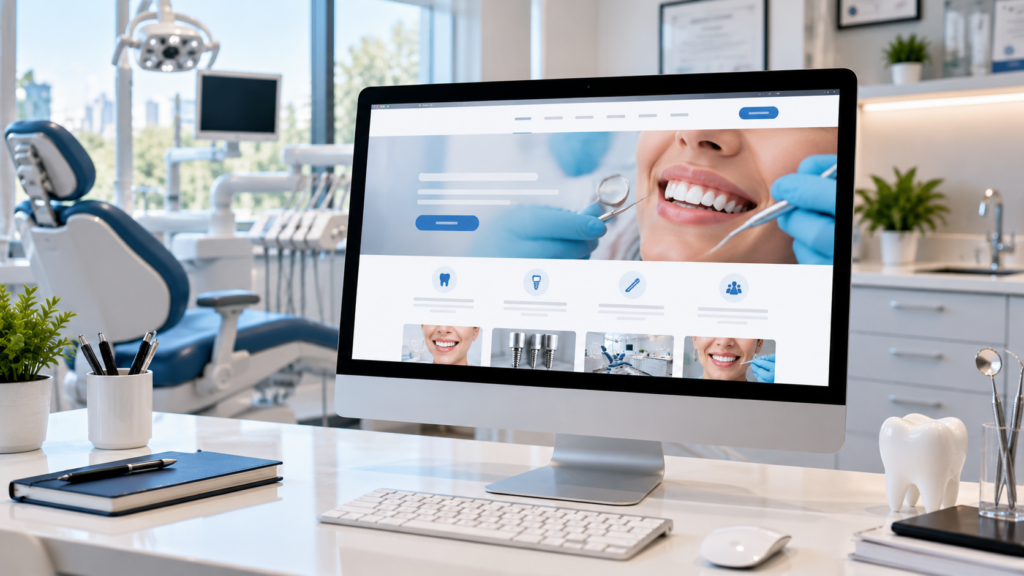
The domain — yourdentalclinic.com — must be registered under the practice’s own account at a domain registrar (GoDaddy, Namecheap, Google Domains, or similar). The registrant email must be a permanent practice-owned address, not the agency’s email. If your agency registered your domain on your behalf and it sits under their account, this is the first thing to fix.
Your Website Hosting
The hosting account — where your website’s files actually live — must also be in the practice’s name and paid on the practice’s billing method. An agency can be given login access to manage the site, but they should never be the account owner. If the agency goes dark or disputes an invoice, your website must not be able to disappear with them.
Your Google Ads Account
This is where the most expensive ownership mistakes happen. A Google Ads account accumulates conversion tracking data, keyword history, quality scores, ad group performance, and audience signals over time. That history is valuable. Google’s algorithm uses it to optimize campaign performance — an aged account with years of data on what converts in your local market will consistently outperform a new account starting from zero.
A dental practice that loses access to an aged account with strong campaign performance data loses a genuine competitive asset in local patient acquisition. The new account it creates will spend weeks or months rebuilding what the old account already knew.
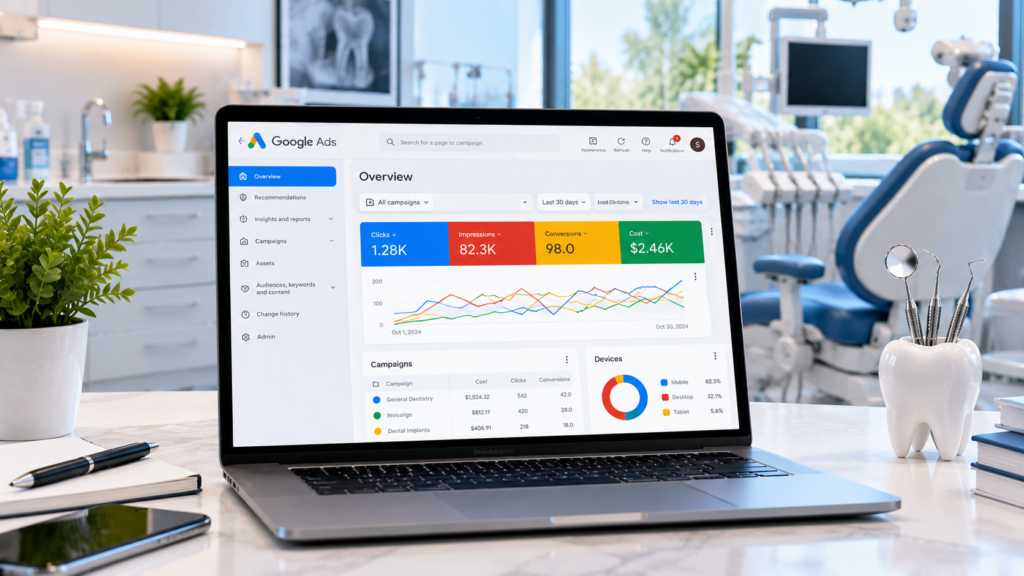
The practice must create its own Google Ads account directly at ads.google.com, under a permanent business Gmail or Google Workspace account that the practice controls. The agency is then linked to the account as a manager through Google’s MCC (Manager Account) structure — they get access to run and optimize ad campaigns, but the account, the conversion data, and the billing relationship belong to the practice.
If the agency is currently listed as the billing owner of your Google Ads account, or if your dental PPC ads are running inside the agency’s own MCC rather than a practice-owned account, this needs to change before the relationship becomes strained.
Your Google Business Profile
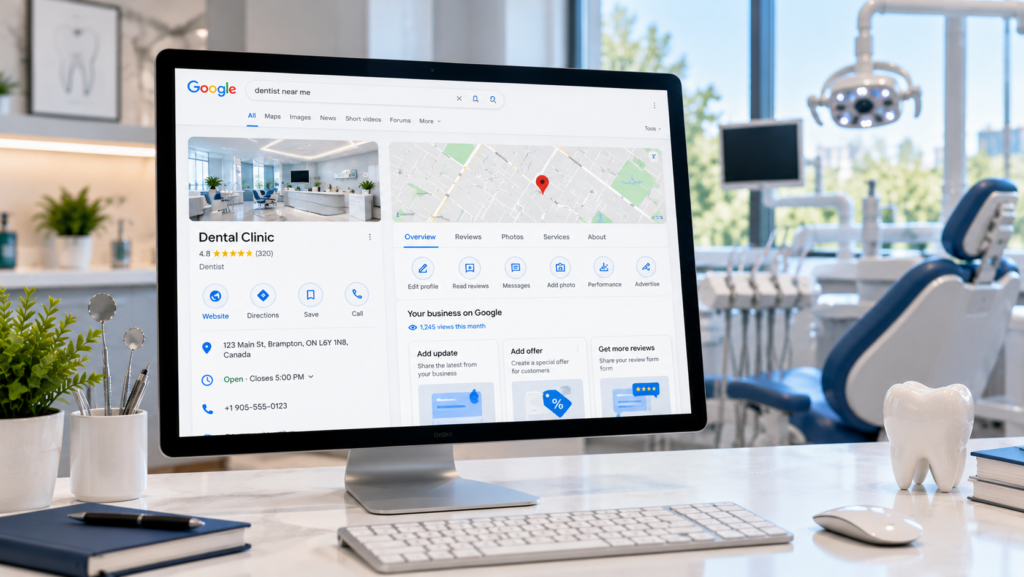
The Google Business Profile Primary Owner must be a Google account controlled permanently by the practice — ideally the practice owner or a senior administrator, using a practice-owned email address. Agencies and marketing staff should be added as Managers only.
As covered in digital marketing best practices, the moment an agency holds Primary Owner status, the practice is one bad parting away from a GBP dispute or complete loss of access to their listing. This is the most common invisible vulnerability in dental marketing.
Your Google Analytics and Search Console Properties
Your analytics data — website traffic, conversion events, patient booking behavior — belongs to your practice. Google Analytics 4 and Google Search Console should be set up under a practice-owned Google account, with the agency added as a user. Many practices discover after switching agencies that years of analytics history live inside the previous agency’s account and cannot be transferred.
What It Actually Costs to Lose Access to These Assets
The stakes are worth being clear about, because the cost of the wrong setup is not just inconvenience.
Website domain loss means losing all the search engine authority your site has accumulated. Local SEO is built over years — your domain’s age, the links pointing to it, and the content indexed under it all contribute to where you rank when prospective patients search for a dentist in your area. Starting over on a new domain means starting your organic SEO from zero.
Google Ads account loss means losing conversion data that may have taken years and significant ad spend to accumulate. Without that history, a new account pays higher costs per click while it learns, and campaign performance will be lower for the first few weeks or months.
Google Business Profile loss is particularly painful because the reviews belong to the profile, not the practice. If you cannot reclaim your existing profile, those reviews do not transfer to a new listing. A dental office with 200 five-star reviews starts at zero.
Analytics data loss means losing the record of what has been working. Without historical data, you cannot optimize ad campaigns, improve landing pages, or understand patient booking behaviour. An agency that holds your analytics property holds your marketing intelligence.
Why Dental Practices End Up in This Position
The single biggest mistake dental practices make before hiring a marketing agency is not owning and controlling their own digital infrastructure before anyone else gets involved.
When a practice delegates everything out of convenience — or because they are not confident with the technical setup — they inadvertently hand over the keys to their digital kingdom. The agency handles the domain registration, sets up the hosting, creates the Google Ads account, and becomes the Primary Owner of the GBP. It happens gradually and without malice in most cases. But the outcome is the same: a power imbalance that leaves the practice vulnerable from day one.
The issue is not that agencies are dishonest. Many are not. The issue is that practices that never own their infrastructure have no protection if the relationship goes wrong — or even if the agency simply closes, changes ownership, or has a staffing change that results in lost credentials.
Dental marketing experts who understand this structure will always set accounts up in the practice’s name. Any agency that resists giving you Primary Owner access to your own accounts is a red flag worth taking seriously.
What to Do Today If You Don’t Own Your Digital Assets
If you are reading this and realizing your website, Google Ads account, or GBP may not be under your control, the most important thing is this: secure your assets before you say anything to your agency.
The moment an agency knows a relationship is ending or under strain, some will revoke access. You need to move first.
Step One: Audit What You Actually Control
Log into every account you believe is yours and check the ownership and billing details:
- Google Business Profile: go to business.google.com and check whether your personal or business email is listed as Primary Owner, or only as Manager
- Google Ads: log into ads.google.com and check whether the account is owned by you or linked from an agency’s manager account
- Website domain: check your registrar (GoDaddy, Namecheap, etc.) — if you don’t have login credentials, that’s the answer
- Google Analytics: check whether your GA4 property is under your Google account or the agency’s
Step Two: Request Ownership Transfer Before Having the Conversation
If the accounts are under the agency’s control, request ownership transfer through the platform’s official process before initiating any broader conversation about the relationship. For Google Ads, this means requesting that the account be transferred to your own MCC or standalone account. For the GBP, this means requesting a Primary Owner transfer through the Google Business Profile interface.
Document every request. Use email so there is a written record.
Step Three: Create Your Own Accounts in Parallel If Needed
If the agency refuses or delays, you may need to create new accounts and begin building from scratch while pursuing the dispute. This is not ideal — it means losing historical data — but it is better than continuing to run patient acquisition through infrastructure you do not control.
For the Google Business Profile specifically, if you cannot reclaim the existing profile, Google has a formal reinstatement process that requires business documentation including your provincial dental licence, business registration, and proof of address.
How the Right Agency Structure Protects Your Practice
A marketing agency relationship structured correctly looks like this: the practice owns every account and every login. The agency is invited in as a manager, administrator, or billing delegate — never as the primary owner of anything.
This protects both parties. The practice retains full control of its digital assets, its patient data, its ad campaign history, and its online reputation. The agency retains the access needed to do their work without carrying the liability of owning accounts that are not theirs.
When you evaluate a dental marketing agency, ask these questions directly before signing anything:
- Will my Google Ads account be created under my own Google login, or under yours?
- Will you be listed as Manager or Primary Owner on my Google Business Profile?
- Will my domain be registered in my name at a registrar I control?
- Will my Google Analytics property be under my account, with you added as a user?
- If we part ways, what is your process for returning access?
A dental marketing agency with nothing to hide will answer these questions clearly and without hesitation. One that hedges, deflects, or frames these as technical details you should not worry about is telling you something important about how they operate.
Practices that set up their digital infrastructure correctly before engaging any agency are in a fundamentally stronger position — not because agencies cannot be trusted, but because good systems do not depend on trust alone. They depend on ownership.
Frequently Asked Questions
Who should own a dental practice’s website domain?
The practice itself — registered under a practice-owned account at a domain registrar, with a permanent practice email as the registrant. The marketing agency should never be the registrant or account owner.
Can a marketing agency run my Google Ads without owning my account?
Yes. The correct setup is for the practice to own its own Google Ads account, with the agency linked as a manager through Google’s MCC structure. This gives the agency full access to run and optimize campaigns while the account and all its historical data remain with the practice.
What happens to my Google Business Profile if I switch dental marketing agencies?
If the agency holds Primary Owner status on your GBP, they control the listing. When the relationship ends, they may remove your access. If you are only a Manager on your own listing, you cannot transfer ownership to yourself. The correct structure is for the practice owner to hold Primary Owner status, with the agency added as Manager.
What is the first thing to do if my agency owns my dental website or Google Ads account?
Audit and document what you control before initiating any conversation about the relationship. Then request ownership transfer through the platform’s official process, in writing, before the agency knows the relationship may be ending.
Should a dental practice have its own Google account separate from its marketing agency?
Yes. Every dental practice should have a permanent Google Workspace or Gmail account that it owns and controls independently. This account should be the Primary Owner of the GBP, the account holder for Google Ads, and the administrator of Google Analytics. Agency access flows from that account, never the other way around.
How do I know if my digital marketing assets are set up correctly?
Log into each platform directly. If you cannot log in, or if you can log in but your email appears as Manager rather than Owner in the GBP or Billing Owner in Google Ads, your setup has a vulnerability worth correcting now.
About Dentist Spark
Dentist Spark is a dental marketing agency helping Canadian dental practices grow through local SEO, Google Business Profile management, Google Ads, and digital strategy. We work exclusively with dental clinics, and every account we manage is set up under the practice’s own ownership from day one.
If you want to audit your current digital asset ownership or set up your accounts correctly before bringing in a marketing partner, contact Dentist Spark to speak with our team.
Website: dentistspark.com Email: hello@dentistspark.com Phone: (416) 710-4936